How to Hold Pickleball Paddle – My 10 Years of Experience Tips
When I first started playing pickleball about ten years ago, the one thing that drove me crazy was figuring out How to Hold Pickleball Paddle. Honestly, I had no clue that my grip was quietly ruining my entire game.
In those early days, my shots were all over the place. One rally, my dinks would sail way too long, the next I’d hit with no power at all, and sometimes the ball would just slip out of my control like it had a mind of its own.
I kept telling myself the problem was a lack of practice or bad technique. But deep down, I knew something else was off. Turns out, it was my grip all along.
The Turning Point
Then, on a sunny afternoon, I was playing with my usual group of friends when an experienced coach happened to join us. We got chatting between games, and he watched me for a minute before saying, “If you don’t hold the paddle correctly, your game will never improve—no matter how much you practice.”
That single sentence hit me hard. Right then, I understood why the best coaches always go back to the basics. They know the fundamentals are the real foundation; everything else is built on top of them.
After that day, I stopped guessing. I started fixing my grip step by step, listened carefully to every coach I could find, and practiced the same simple drills over and over until it finally felt natural.
Now, after ten years on the court, I can tell you this with full confidence: if you don’t get the basics right, you’ll never move forward. That one conversation was the biggest turning point in my pickleball journey.
If you’re still unsure how to hold your paddle correctly, keep reading. By the end of this article, you’ll know exactly how to fix those frustrating mistakes that are holding your game back. I’ve written every word here from my own real experience—ten years of trial and error, plus all the golden advice I picked up from expert coaches along the way.
The Continental Grip
If you’re just getting into pickleball, one of the first things you really need to nail is how to hold the paddle the right way. A lot of beginners skip over their grip, and that one small thing ends up messing up their entire game.
That’s exactly why nearly every coach begins with the same go-to grip — the Continental Grip. It’s a simple, all-purpose hold that’s quick to pick up and works in pretty much every situation on the court.
People often call this the “handshake grip” or “hammer grip” because you hold the paddle in a super natural, straight position — exactly like you’re shaking hands with someone or gripping a hammer. The biggest advantage is that it feels comfortable for beginners and makes it easy to hit all kinds of shots without any hassle.
How to hold the Continental Grip
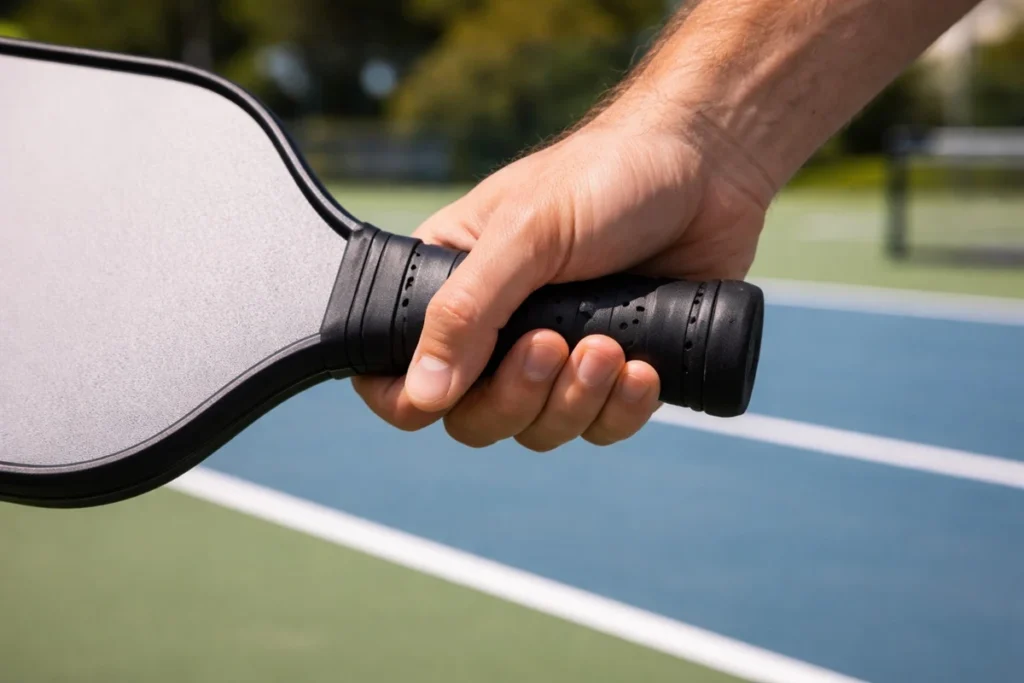
To get the Continental Grip down perfectly, just follow these easy steps:
1. Hold the paddle like a handshake
Grip the paddle exactly as if you’re shaking someone’s hand. Your palm should rest on the side of the handle, not flat against the paddle face.
2. Focus on the “V” shape
Line up the “V” formed between your thumb and index finger right on the top edge of the handle (the top bevel). This placement keeps the grip solid and correct.
3. Keep your grip pressure balanced
Don’t squeeze the paddle too tightly or hold it too loosely. A light-to-medium pressure (around 3–4 out of 10) gives you the best control and lets you move the paddle quickly.
4. Position of your index finger
You can keep your index finger slightly separated from the rest or keep it alongside them. Either way works fine, but leaving it a little apart often gives you extra control over the paddle.
This grip lets you hit forehands, backhands, dinks, volleys, and slices smoothly without changing your hand position each time. That’s why coaches on popular YouTube channels like The Pickleball Clinic and The Dink always tell beginners that 90% of them should start with this grip and stick with it.
Right-Handed vs Left-Handed
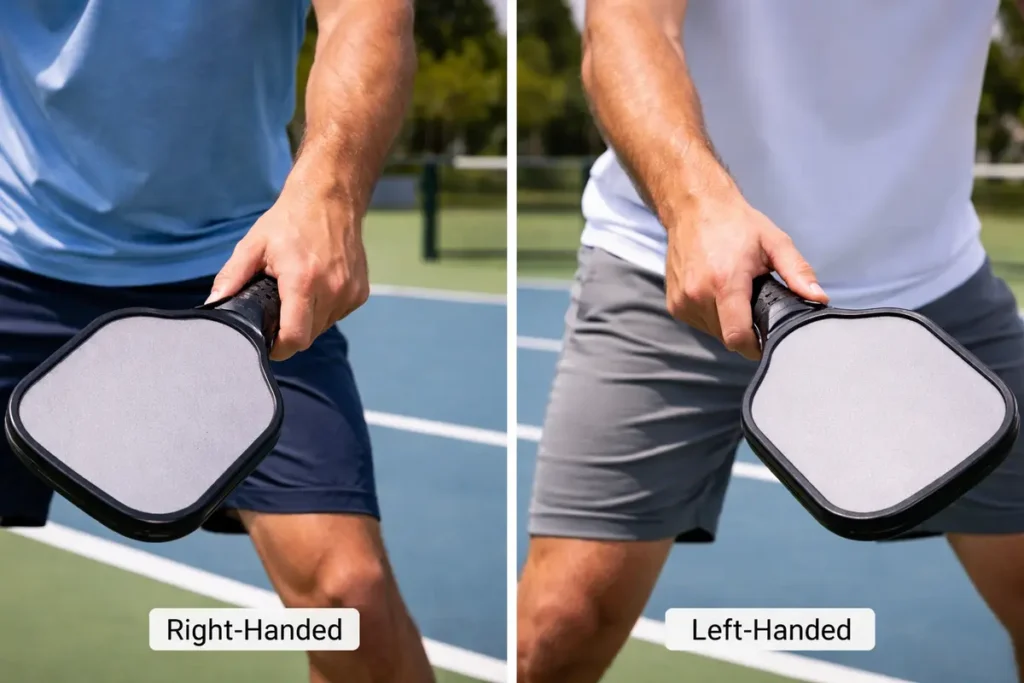
Right-handed players should rotate their hand by a fraction of a turn clockwise until the paddle face is perfectly neutral. In this grip, the thumb rests naturally on the left side of the handle from the player’s own viewpoint.
Left-handed players simply do the opposite: rotate the hand a fraction of a turn counterclockwise. The whole motion mirrors the right-handed version exactly. As a result, the bevel numbering shifts—for example, the spot that feels like bevel 2 for right-handers becomes bevel 8 (or whichever bevel now sits at the top for you). Players who have tried this adjustment with left-handed partners often master it in a single session after visualizing the mirror image.
Coaches share one clear pro tip that applies to everyone: whether you are right-handed or left-handed, the Continental grip behaves exactly the same on both sides of the court. There is no need to overthink the technique.
Continental vs Eastern vs Western Grip
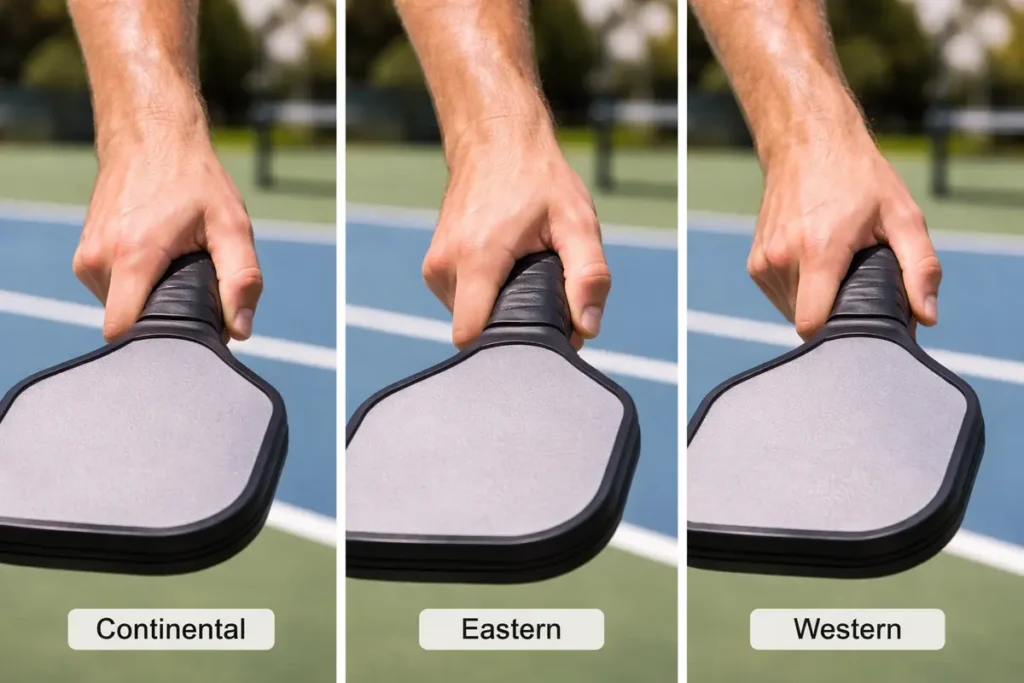
I once thought there was only one correct paddle grip. Later, I realized each grip serves a purpose based on whether you need control, power, or spin in the moment.
Starting with the Continental Grip (the most balanced and widely used): This is my go-to for dinks, volleys right at the kitchen line, blocks, and slices. It gives you solid control in quick rallies and feels the most natural when you’re playing close to the net.
Eastern Grip (more power with good topspin):
With the Eastern grip, you simply shift your hand forward by one bevel. That small change closes the paddle face just enough to create nice topspin on drives and third-shot drops. It works great for attacking shots while still keeping decent control.
Lastly, the Western Grip is for maximum topspin, but with limited control. This one is mainly for heavy topspin from the baseline. It generates a ton of spin, but it makes backhand shots and low balls much harder to handle, so most players don’t use it very often.
The biggest lesson for me is this: you don’t have to constantly switch grips. For most players, sticking with the Continental—or a light hybrid of it—provides consistent control and reliability during play. Focus on mastering this grip, and you’ll meet most of the game’s demands with confidence.
Does Indoor vs Outdoor Change How You Hold the Paddle?
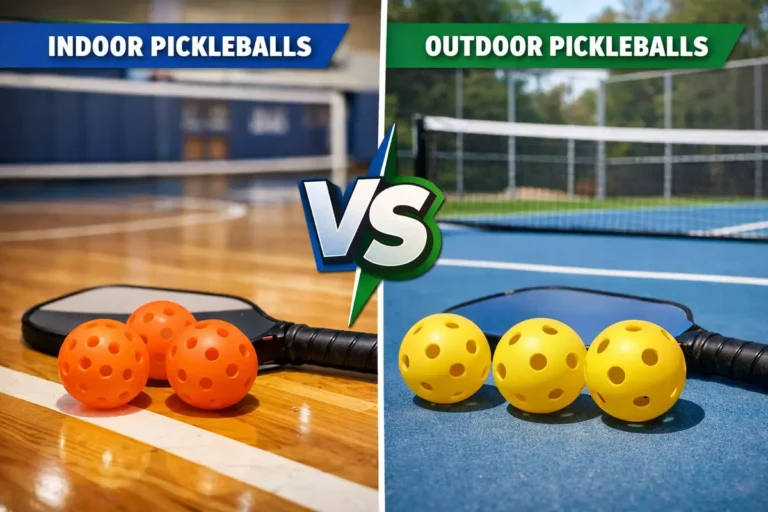
No, Your grip stays exactly the same whether you’re playing on indoor courts in a gym or outdoor courts in the park.
What actually changes is your paddle choice and the amount of pressure you apply. Indoor balls are softer and slower, so coaches recommend a control-oriented paddle and a very light grip—often even softer than a 3/10—for better touch on dinks and delicate shots. Outdoors, when the wind kicks in, you might naturally squeeze a little firmer on drives and power shots. But the hand position and basic grip? They remain identical.
Common Mistakes That Kill Your Game (I Made Every Single One)
- Gripping the paddle too tightly, like you’re choking it — this completely kills your touch on dinks.
- Using the wrong bevel — your shots either sail long or dump straight into the net.
- Staying too low at the kitchen line — pros slide their hand higher up the handle for quicker handspeed on volleys.
- Death-gripping during serves and drives — save the firmer pressure for when you really need power; otherwise, keep it relaxed.
Fix these habits, and your game can improve quickly. I moved up from a 3.0 to a 4.0 player level just by adjusting my grip.
Quick Drills to Lock It In (Try These Today)
- Wall rallies — hit 50 forehands and backhands in a row without ever changing your grip.
- Kitchen dink game — stay in the Continental grip and focus on keeping the pressure soft and light.
- Third-shot drop practice — experiment with the Eastern hybrid grip and notice the extra spin you get.
- Film yourself — record a few points and compare them side-by-side with pro coach tutorials on YouTube. The difference jumps out instantly.
Final Thought From My 10 Years of Playing
Top coaches like Mark Renneson, Tyson McGuffin’s team, Sarah Ansboury, and every pro featured on The Dink all say the same thing: the grip is the foundation of your entire game. Get this right, and everything else—dinks, drives, volleys, and consistency—becomes so much easier.
You don’t need expensive paddles or endless practice hours. You just need to hold the paddle exactly the way the coaches teach.
So pick up your paddle, use the handshake or hammer method, and practice. Your game could feel completely different.