
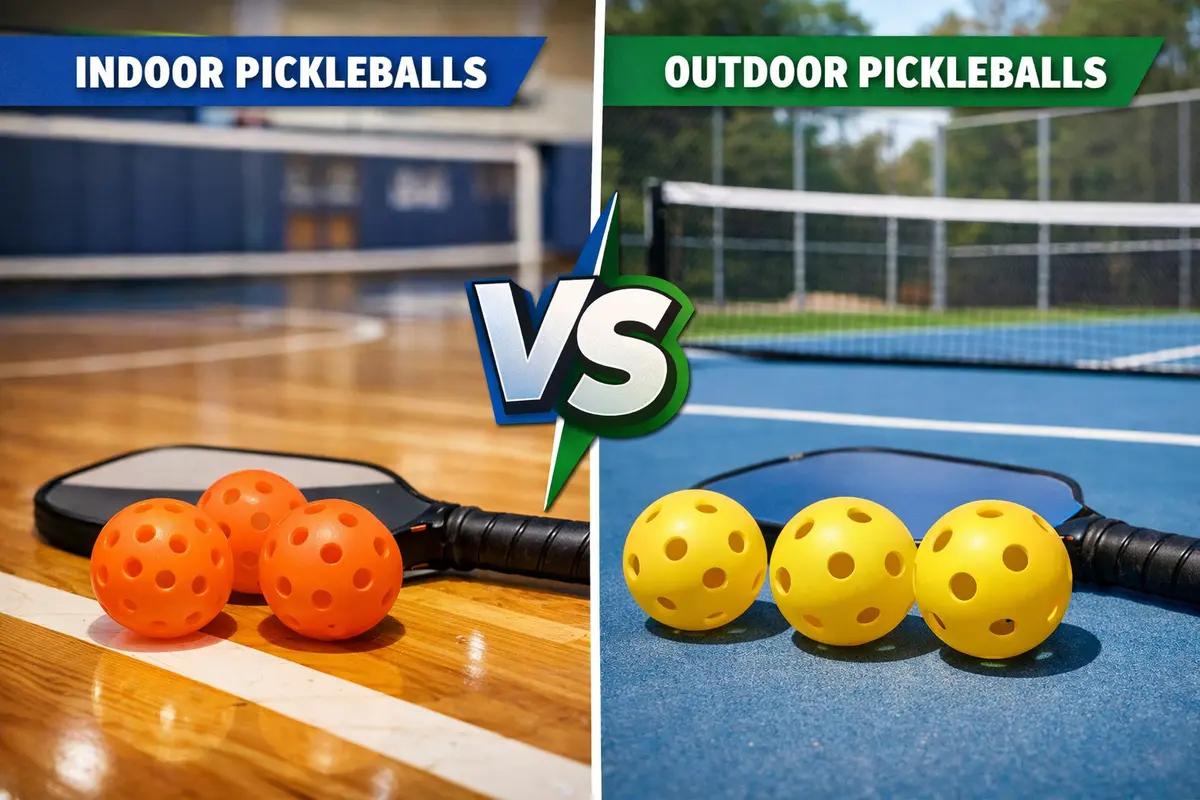
What’s the Difference Between Indoor and Outdoor Pickleballs?
Most new pickleball players, when they step onto the court, put all their focus only on their shots, forehand and backhand. But during that same time, one basic thing gets overlooked: choosing the right ball. On the surface, it seems like a small thing, but in reality, this is the very choice that can either make your game or break it.
The real problem is that many players do not take the difference between indoor and outdoor pickleballs seriously. They think a ball is just a ball and can be used anywhere. But that is not the case. Both balls are different in terms of structure, weight, and speed, and it is this very difference that directly affects the way the game is played.
If you use an outdoor ball on an indoor court, you will feel a loss of control. The shots will become hard and uncontrollable, and the placement will not be what you want. On the other hand, if you bring an indoor ball into an outdoor setting, the ball becomes unbalanced due to the effect of wind and surface, which affects your timing and reaction.
This is why the indoor game is mostly based on control, softness, and strategy. Here you play every shot thoughtfully, create openings, and set up points. While in the outdoor game, conditions keep changing: wind, light, and court surface, and all of these test your power, speed, and quick decisions.
A smart player is the one who understands these fine details. He knows which ball to use and when and how to adjust his game according to the environment. This very understanding is what takes him ahead of average players.
In this article, we will simply explain this very thing: what the difference between indoor and outdoor pickleballs is, what the characteristics of both balls are, and which ball you should choose in which situation, so that you can play every match with more confidence.
Why Do Both Balls Look Different?
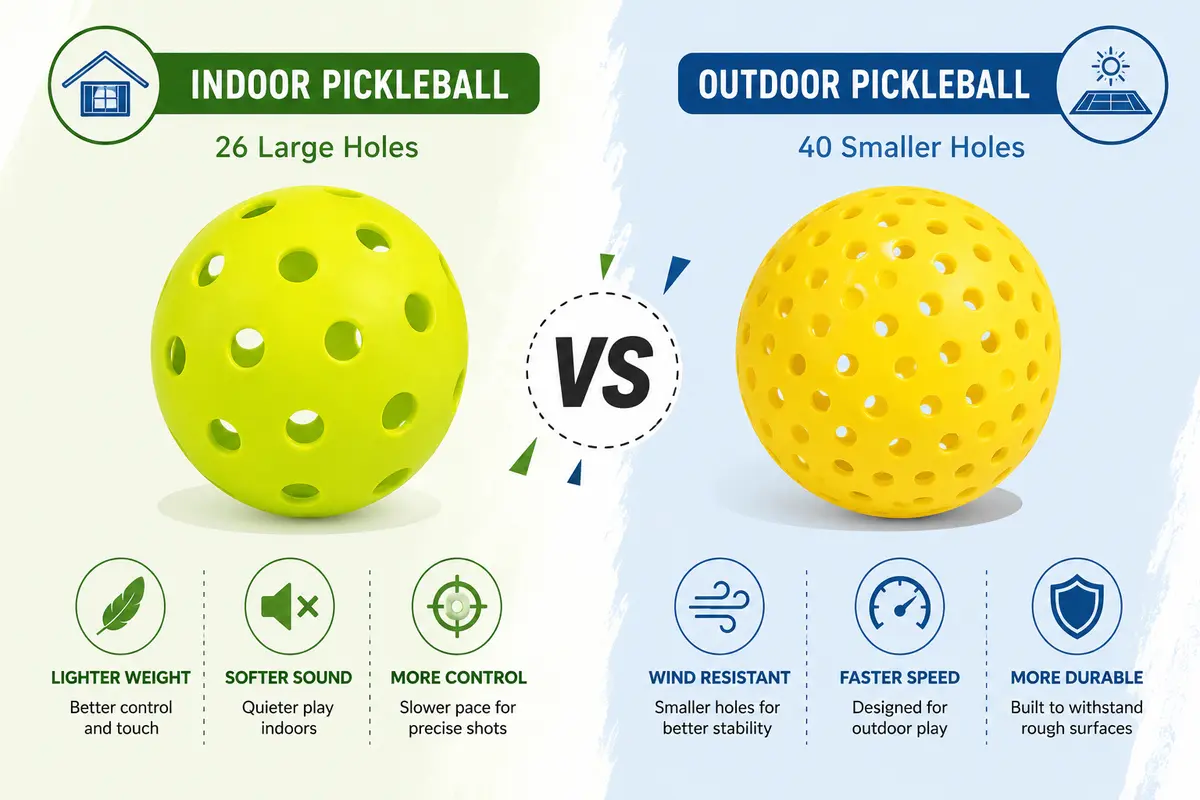
When you place indoor and outdoor pickleballs side by side, the difference becomes clear right away. After all, why do both balls of the same game look different from each other? The truth is, this difference is not just about shape, but it is designed, keeping indoor and outdoor play in mind.
Indoor Pickleball
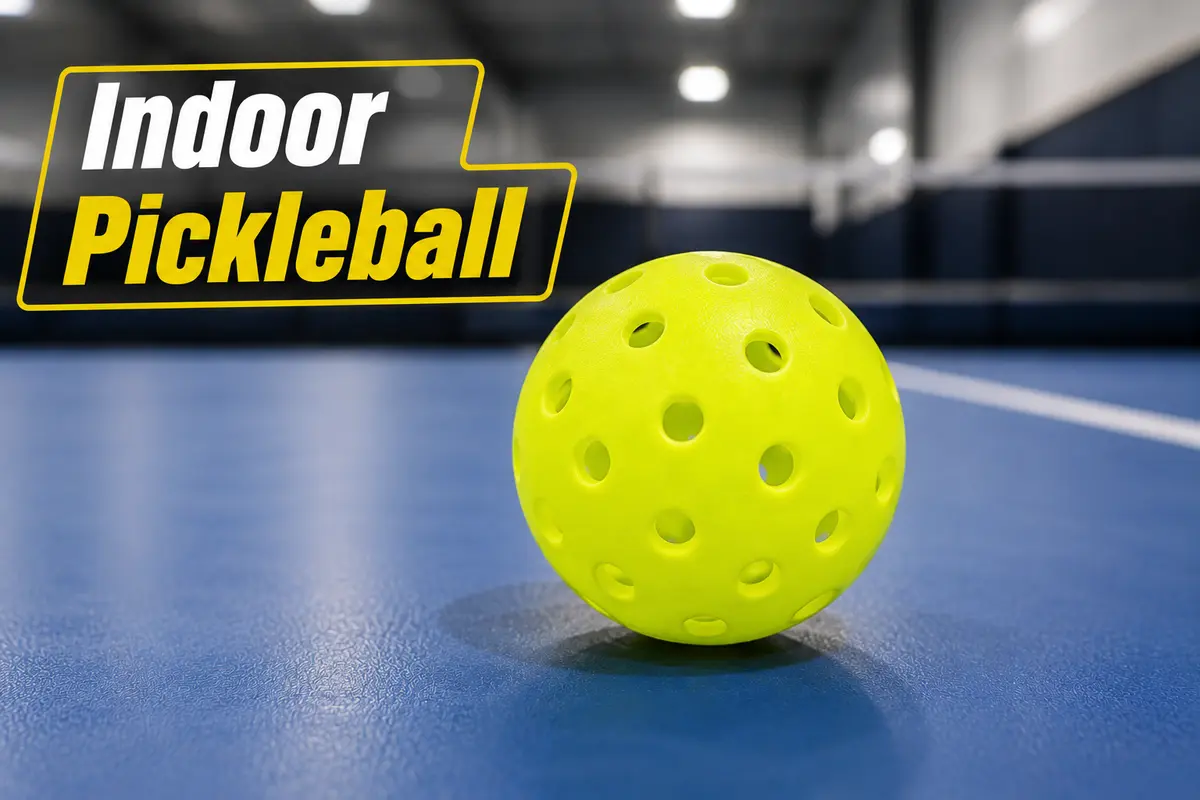
The indoor pickleball ball is made specifically for closed environments, where there is no effect of wind or weather. That is why it usually has 26 larger holes and feels soft and lightweight.
This softness gives you one big advantage: better control and accurate placement. When you play a shot, the ball stays firmer, which makes it easy to place it where you want.
If you want to improve control, touch, and strategy in your game, then the indoor ball is the best choice for you.
Outdoor Pickleball Ball
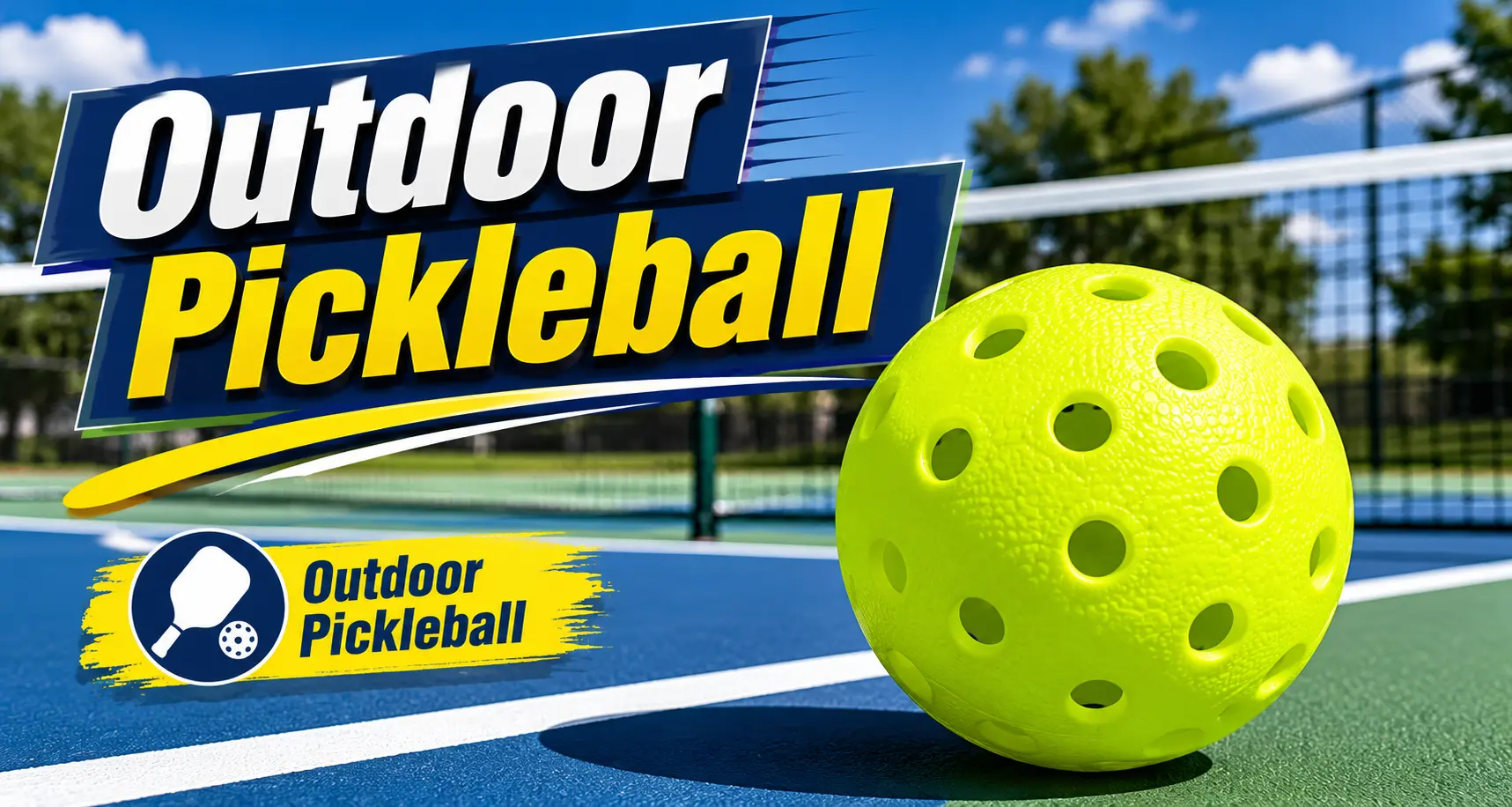
The outdoor pickleball ball is made for open environments, where wind, light, and the court surface affect the game. That is why it has around 40 smaller holes and is harder and slightly heavier.
This design keeps the ball more stable in the air, which makes the shots feel faster and more powerful. But along with that, you also need quick reactions and better control.
If you play outdoors and use the right ball, you can maintain your performance even in difficult conditions and play with more confidence.
Difference in Feel and Performance
To understand the difference between indoor and outdoor pickleballs, the most important thing is the performance of the ball. The indoor ball is soft, bounces less, and makes a lighter sound. That is why you get better control, and the shots feel more accurate.
The outdoor ball is hard, bounces more, and makes a “pop” sound on the shot. This makes the game faster and more powerful, but control becomes harder.
How Does It Affect Your Game?
In the indoor game, control is the most important thing. The ball is soft, so you can easily place your shots and play longer rallies.
In the outdoor game, speed and power become more important. You have to adjust to the wind, and you need to react quickly.
Many new players often ask if it is easy to play in both environments. In the beginning, it feels difficult because the feel of the indoor and outdoor balls is different, and the timing changes.
But with regular practice, you can learn to play pickleball in both with ease.
Durability and Price
When looking at the difference between indoor and outdoor pickleballs, durability is something you should pay special attention to.
The outdoor ball can wear out quickly because it is played on a hard court, and sometimes it even cracks, which is its most common weakness.
Compared to that, the indoor ball lasts relatively longer because it is played on a softer surface. However, over time, it can also develop cracks.
In terms of price, both balls are available in pretty much the same price range.
Can One Ball Be Used in Both Places?
This is a question that new players often ask: Can one ball be used on both indoor and outdoor courts? Yes, but the results will be different.
The indoor ball gets more affected by the wind when played outside, which makes control harder. While the outdoor ball, when played inside, makes the game unnecessarily fast and hard.
This problem comes up especially when you are competing against an opponent, because the right choice of ball directly affects your performance.
What to Look for Before Buying?
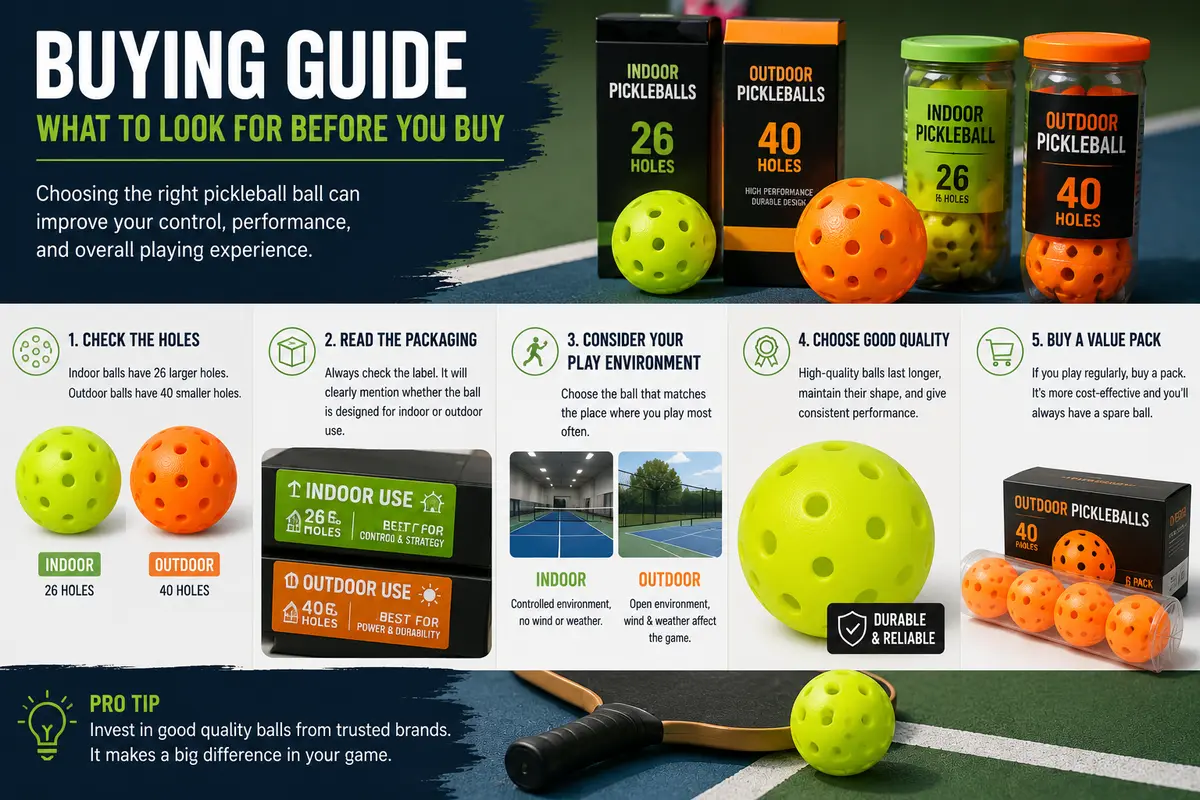
If you are planning to buy a ball, it is important to properly understand the difference between indoor and outdoor pickleballs before making your purchase.
First, look at the number and size of the holes, because that is the real way to identify an indoor and outdoor ball.
After that, make sure to check the packaging. It is usually clearly written whether the ball is for indoor or outdoor use, so trust the label instead of guessing.
If you are a new player, the best decision is to buy the ball that matches the environment where you play most. This way, it will be easier for you to learn the game, and you will be able to gain better control faster.
Instead of buying a single ball, buy a good-quality pack, because when you play regularly, it is important for the ball to maintain its quality, and that is what improves your performance.
Conclusion
Pickleball is a simple but interesting game, and its basic structure stays the same everywhere, but the difference between indoor and outdoor pickleballs actually comes from the ball.
This small difference clearly changes the style, speed, and control of the game, and its effect is felt in every shot.
That is why the next time you go to the court, make sure to ask yourself this question: Are you playing indoors or outdoors?
Because that one decision plays an important role in making your game better.
2 Comments