
The Pickleball Third Shot Drop – A Complete Guide
You’re playing doubles pickleball. You serve the ball clean and deep. Your opponents fire back a strong return. Now it’s your turn for the pickleball third shot drop. Land a soft drop right in their kitchen, and you flip the whole point in your favor. Hit it too hard or too high, and they punish you from the net.
That’s why the third shot drop is often called the most important shot in pickleball. It moves you from a weak position at the back to the point. In this guide, we’ll cover the problem it solves, explain what the shot is, why it works, how to hit it, common mistakes, smart practice methods, and situations when to use a drop or a drive. By the end, you’ll have what you need to make this shot a weapon in your game.
The Court Position Problem
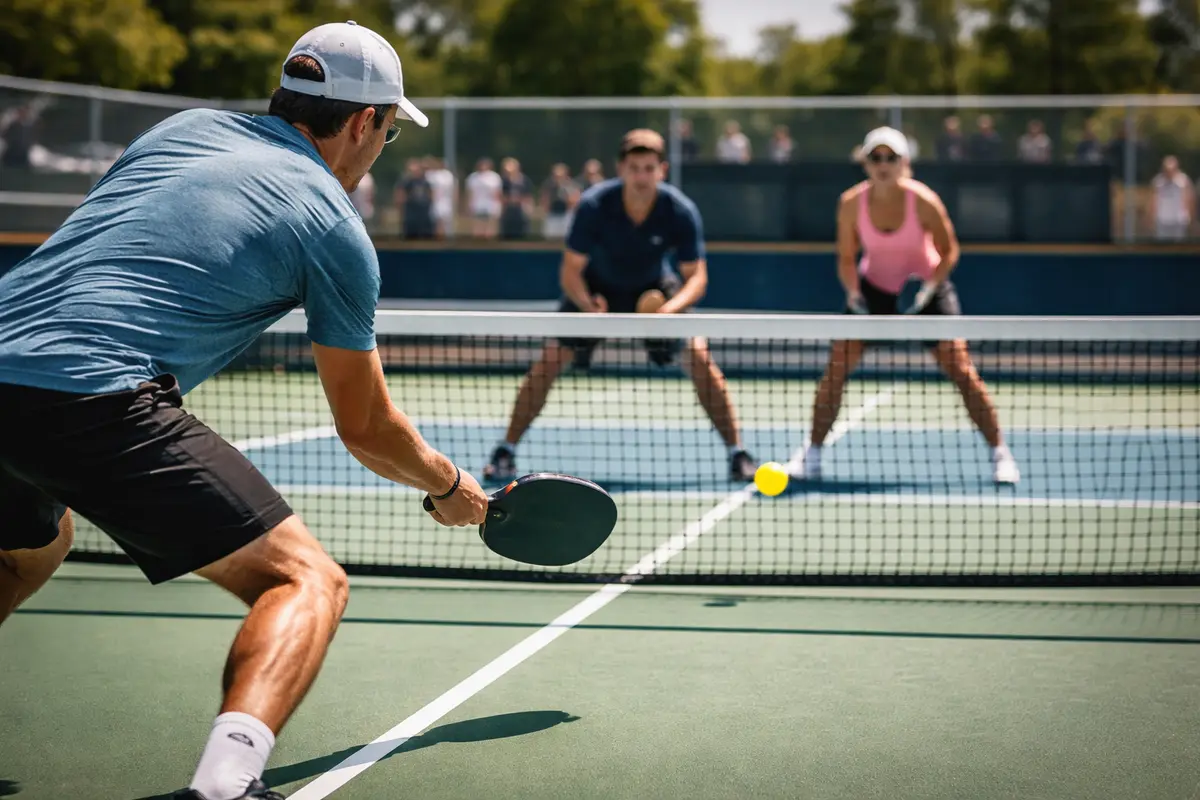
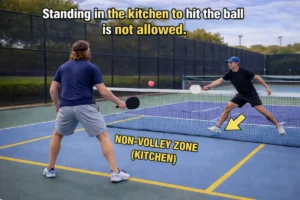
After you serve, you and your partner are stuck near the baseline. The returning team sprints to the kitchen line—the Non-Volley Zone at the net. They set up and wait to volley anything your way.
This creates the classic “two up, two back” problem. Your opponents control the net, where most points are won. You’re stuck 20 feet back, forced to hit from deep in the court. A hard drive feels powerful, but if it’s even a little high, they smash it back. A lob is risky, too. So, what’s the answer? You need a smart play that resets the point and gives you time to move forward—that’s where the third shot drop comes in.
What is the Third Shot Drop
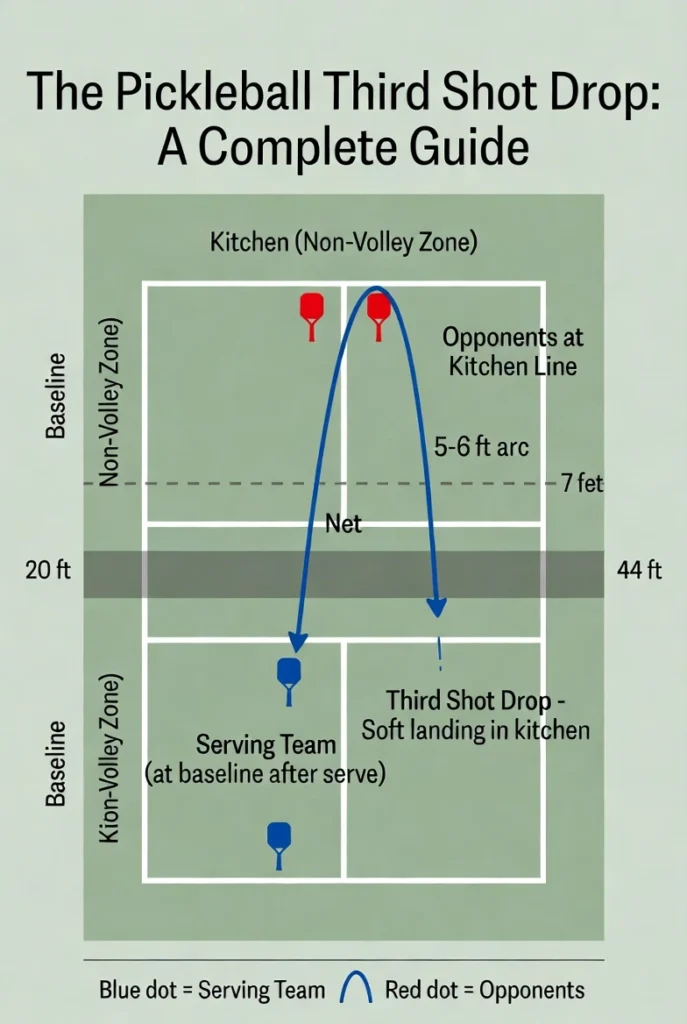
The third shot drop pickleball is a soft, controlled shot by the serving team on the third rally hit, after the serve and return. It’s hit from near the baseline. It floats gently over the net and lands softly in the opponent’s Kitchen.
It’s very different from a third shot drop. The drive is fast and aggressive—ideal when the return is high or short. The drop is all about touch and control. A good drop shot looks smooth and effortless: it clears the net with a low arc and lands softly in the front or middle of the kitchen with almost no bounce. Your opponents are forced to let it bounce, then hit it upward—which is exactly what you want.
Why It Works
The secret is creating a ball that’s almost impossible to attack. A short, soft drop in the kitchen prevents your opponents from smashing or driving with power. They must dink it up, giving you time to step toward the net while they’re hitting from below.
It cancels out their net advantage and puts both teams on even ground. The slower pace also lets you move safely—no rushed sprint that leaves you out of position. Top players call it the perfect bridge from defence at the baseline to offence at the net.
Mechanics of the Shot
The good news? The mechanics are simple once you feel them.
- Grip and soft hands: Hold the paddle loosely, about a 3 or 4 out of 10. Tight hands make the ball fly long. Soft hands take off pace and give you touch.
- Stance and body position: Bend your knees, keep your weight on the balls of your feet, and keep the paddle out in front. A slightly open stance helps control.
- Swing motion and follow-through: Use a short backswing—no big wind-up. Swing low to high, like gently tossing the ball underhand. Hit it in front of your body as it drops, and follow through toward your target with the paddle slightly open.
- The role of pace: Less is more. Aim for a soft arc that peaks at about 5 or 6 feet, right at the kitchen line. Think of hitting toward an imaginary spot halfway to the kitchen at head height—gravity does the rest.
After you hit, keep moving forward. That momentum prevents pop-ups and puts you closer to the net for your next shot.
Common Mistakes (and How to Fix Them)
Even strong players have trouble with this shot at first. Here are the top three mistakes and easy fixes:
- Hitting too hard: The ball sails long or out. Fix: Loosen your grip further and focus on a gentle lifting motion. Remind yourself it’s a big dink, not a drive.
- Popping the ball up: Your opponents crush it. Fix: Hit the ball as it’s dropping, keep your eyes on it to the paddle, and stay balanced, with your weight forward. Skip big backswings or wrist snaps.
- Hitting into the net: The ball clips the tape. Fix: Open the paddle face a bit more and aim for a higher arc. It’s better to clear the net than baby the shot and miss.
Quick tip: Use your bigger muscles—legs and shoulders—rather than just your wrist.
How to Practice It
Consistency beats perfection. Try to land 7 or 8 out of 10 drops in the kitchen before using them in matches.
Solo drills:
- Drop a basket of balls from the baseline and aim at targets in the opposite kitchen. Focus on a smooth, low-to-high swing.
- Stand 15 feet from a wall. Hit yourself. Then drop it back. This mimics real game speed.
Partner drills:
- One partner feeds from the kitchen line. You drop and step forward into the transition area. Advance after each shot.
- Alternate cross-court drops and move in after every hit.
- Try the “slinky” drill: Start dinking close to the net, then gradually step back to the baseline, keeping the same touch.
Spend 10 to 15 minutes on these drills before every session. You’ll see results fast.
When to Use It — and When Not To
Always read the return before deciding.
Use the drop when: The return is deep and low, pushing you back.
- Both opponents are already planted at the kitchen line.
- You need those extra seconds to move forward safely.
Skip the drop; drive instead when the return is short or high; attack their feet or backhand.
- You have a clear chance to put them on defence right away.
- You’re already halfway to the net, and the ball is begging to be smashed.
Top players mix both shots. The drop keeps you safe most of the time, while the drive keeps your opponents guessing.
Conclusion
Mastering the third shot drop makes a huge difference. You’ll hold serve more, win rallies from tough spots, and play with confidence.
It takes weeks or months of practice, but every clean drop is a win. Grab a partner, hit those drills, and watch your game improve. Your opponents will soon dread your third shot.
Now get out there, keep your hands soft on that paddle, and start dropping your way to more wins. See you at the kitchen line.
The tip about imagining an arc that peaks at head height near the kitchen line is such a clean mental cue — it reframes the shot as geometry rather than just “hit it soft.” Does that visualization tend to click faster for players who come from a tennis background, or do complete beginners sometimes pick it up more naturally?