Portable Pickleball Court Setup and Cost (2026)
Many pickleball players ask, “What is a portable court?” Hearing the term “portable court” can leave them confused. If you want to learn more about portable courts, this article is for you. Setting up a portable court is easy; you can set it up on any flat surface in a few moments.
Right now, more people are playing pickleball every day. But the number of courts isn’t keeping pace. Building new courts takes both time and money. A portable option solves this problem: set up a court fast and get playing.
Types of Portable Pickleball Courts
There are four main types of portable pickleball courts, each one designed to meet a different need.
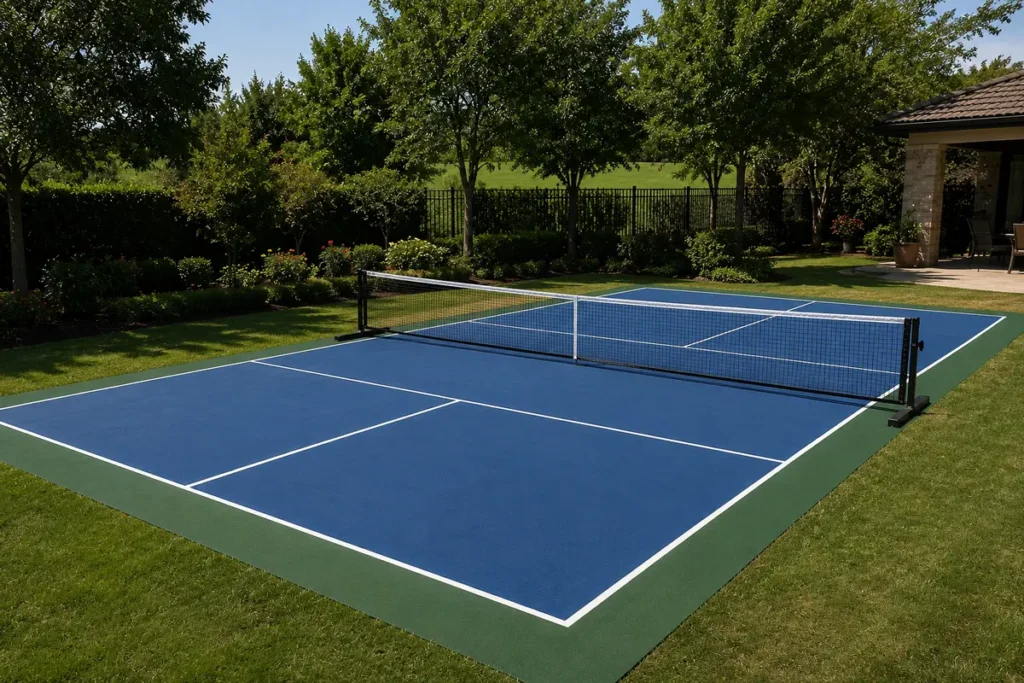
1. Modular Tile / Interlocking Surface Systems
This modular tile system is the best choice for professionals. It works well for homes, schools, clubs, and tournaments. Interlocking tiles connect to form a complete, strong, and smooth court. Players enjoy better bounce, a powerful grip, and less joint stress on a surface like a permanent court.
2. Roll-out vinyl / Mat courts
Roll-out vinyl is a flexible mat. Lay it down, and the court is ready. It sets up fast and costs less than other options. You can use it indoors or outdoors, too. That’s why so many gyms, schools, event spaces, and multi-purpose halls rely on it.
3. Portable Net + Line Marking System
Want the cheapest, fastest way to get a court going? This is it. Pop up the net, mark your lines, and you’re playing within the hour. No special skills needed, no big setup. Grab it and go, whether that’s your backyard, a park, or a friend’s driveway. It works especially well if you’re new to the game, setting something up at home, or want a quick match without much fuss.
4. Inflatable or Temporary Structure Courts
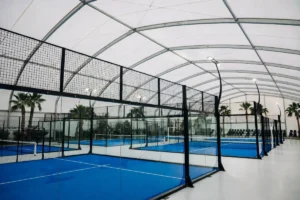
Inflatable courts are not for regular games. They’re made for something different: one-time events, special setups, courts that float on water, or domes made of air. That’s the whole point of them. They’re not practical for daily sport, but they don’t need to be. Their job is to create a moment people remember, something that feels like a show rather than a match. That’s why you’ll see them at resorts, parties, and brand-sponsored events instead of local sports clubs.
Important Features to Consider
- Surface Quality and Grip
The surface of a portable pickleball court must be smooth and even. Don’t skip this. Players need a proper grip. Uneven ground means trouble the moment the game picks up pace. A level surface isn’t optional if you want to avoid slips. It’s what lets players push off and move fast without worrying about their footing giving out. Rubber and modular tiles tend to be the go-to choices here. The game is comfortable. It gives players control. The game feels better.
- Court Size Measurements
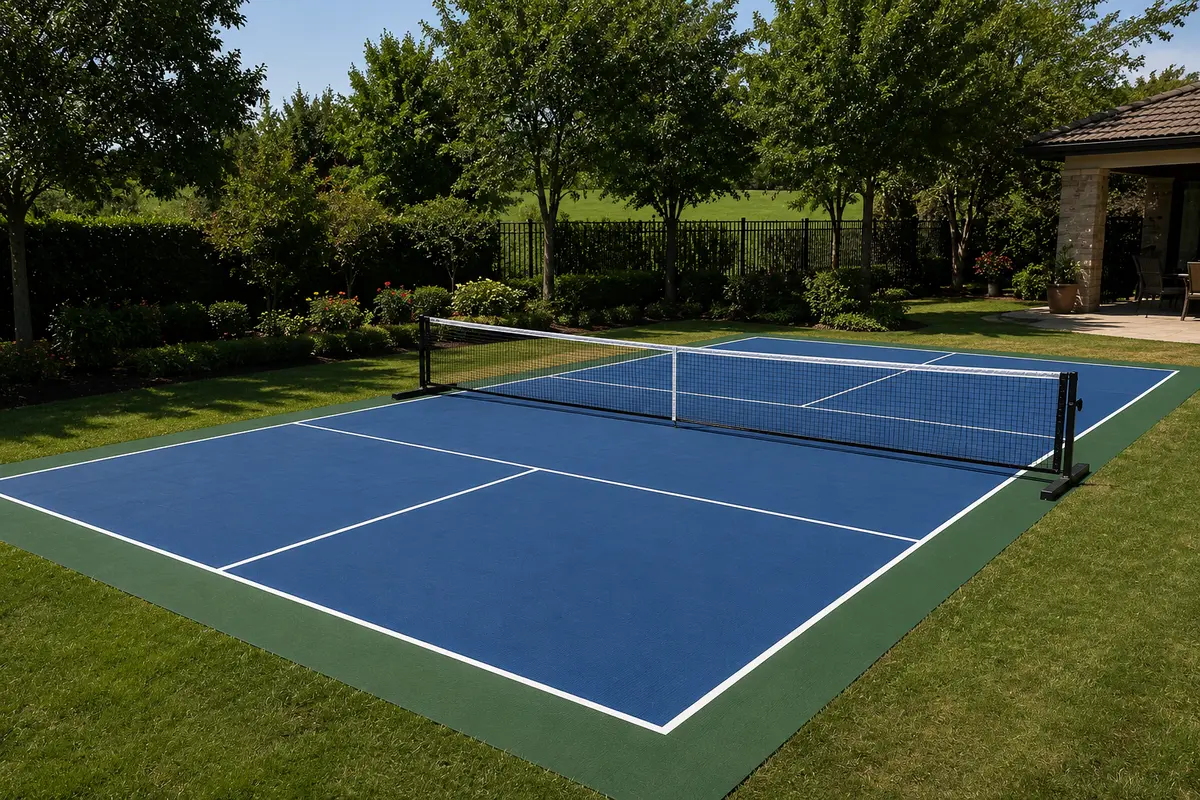
Whether you build a professional court or a portable one, the official dimensions stay the same. A standard pickleball court measures 20 feet wide and 44 feet long. That size doesn’t change for a portable setup either. There is extra space around the court. This is for player comfort. It is also for safety. The recommended total area usually comes out to 30 feet wide by 60 feet long.
Size isn’t the only thing that counts, though. Accurate lines and the “kitchen area” matter too, since they make the game clearer and more engaging. The kitchen area extends 7 feet out from the net on both sides. This is also called the “non-volley zone.
- Portability and Setup Time
Ease of setup is what makes a portable court so appealing in the first place. The best courts are the ones that go up fast and come down without any hassle. Lightweight panels and interlocking systems save both time and effort. A court can be ready anywhere from a few hours to a full day, which makes the whole thing that much more convenient to use.
- Weather resistance and durability
Planning to play outdoors? Then the court’s durability isn’t something you can afford to overlook. A good portable court has to handle sun, rain, and whatever the weather throws at it.
That’s where strong, UV-resistant materials come in;; they keep the court protected over the long haul. The payoff: performance that holds steady and a court that still looks new well after the first season.
- Indoor and outdoor use
No single court fits every space. Some suits indoor halls; others handle rough outdoor ground. What you want is a court that holds up well in both. More flexibility, better value — that’s the payoff.
Benefits of a Portable Court
If you’re watching your budget, a portable court is hard to beat. It’s also a smart pick for anyone who wants to set up a court and start earning from it, without the cost of construction, a fixed location, or a complicated setup process. With a portable court, you get freedom, savings, and ease all in one package. No surprise, then, that families, schools, and communities are picking these up faster than ever.
Freedom to Play Anywhere (Driveway, Gym, Park)
Flexibility is what makes a portable court so appealing. Set it up on a driveway, in a gym, at the park, or wherever you’ve got flat ground. Indoors or outdoors, it doesn’t matter. Plans come together at the last minute. No problem, the court’s ready in minutes.
- Works on a driveway, in a gym, at a park, or in a backyard
- Suits both indoor and outdoor play
- Ready right away for a last-minute game
Wherever you find the space, that’s where the game starts. Nothing holds you back.
Lower Cost Than a Permanent Court
Concrete. Labor. Ongoing upkeep. Building a traditional court means paying for all three, and the bill adds up fast. A portable court skips most of that. You get strong performance on a smaller budget, and the value only grows the longer you use it.
- Lower upfront cost
- Almost no maintenance
- A full playing experience with no construction needed
It’s a great fit for anyone who wants a professional-level experience without the professional-level price tag.
Easy setup, storage, and transport
No tools. No hassle. Unfold the court and you’re playing in minutes. When the game’s over, roll it back up and toss it in the trunk or stash it in the garage.
- Set it up yourself, no tools, no hassle
- Rolls up in seconds once you’re done playing
- Tucks away in a car trunk or garage closet
Bring it along to tournaments, weekend meetups, or your next trip out of town.
Ideal for rentals and shared spaces
If you’re renting or can’t get approval for permanent construction, a portable court solves the problem. It turns any space into a playing area, then clears away just as easily when you’re done.
- No permanent changes
- No conflict with community rules
- Space clears right away after use
That’s why it works so well for parks, schools, and community centers too.
Who is it best for?
Beginners starting out. Busy families. Coaches running drills. If you want ease and flexibility, a portable court fits the bill.
- Families and beginners
- Schools and coaching centers
- Event organizers
- Anyone working with limited space or budget
How to Set Up and Installation Portable Pickleball Court in 5 Easy Steps
Got a driveway or a decent-sized patch of backyard? That’s all you need. A backyard, driveway, or any flat patch of ground works fine, and you can get it ready in a handful of steps without any real construction.
Prepare the Space
Concrete works. So does a driveway, any flat, clean surface you’ve got. The main thing to watch for is water pooling anywhere on it, since that’s what causes slipping and throws off how the ball bounces. It’s also worth checking which direction you’re facing before you commit to a spot. Nobody wants the sun in their eyes halfway through a rally.
Take Accurate Measurements
Measure out the court area first, then mark the boundary lines using tape or a marker, whatever you have on hand. Give yourself a bit of extra space around the edges too. That buffer makes a real difference once you’re actually moving around during play.
Set Up the Net
Place the portable net in the middle of the court. Take a moment to line it up straight and check that it’s not wobbling.
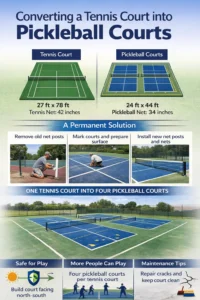
You have a tennis court. You want to play pickleball. This article can help.
Final Check
Before you start playing, walk the court once more. Check the lines, check the net, and fix anything that’s crooked or loose.
That’s it. Most people can get a court set up somewhere between thirty minutes and two hours, and then it’s game on.
Portable Pickleball Court Cost Summary
How much it will cost to build a portable pickleball court in 2026 is explained below in three simple levels.
| Equipment Item | Low-End / budget price | Mid-Range Price | Premium Price |
|---|---|---|---|
| Portable Pickleball Net System | $50–$100 | $100–$200 | $200–$400+ |
| Court Line Marker Kit (vinyl/rubber/plastic reusable) | $20–$50 | $50–$100 | $100–$160+ |
| Temporary Court Tape (painter’s / marking tape, 2-inch) | $5–$15 per roll | $15–$40 (multi-pack) | $40–$60+ (bulk) |
| Sidewalk / Athletic Chalk | $5 – $15 | $15–$25 | $25–$40 |
| Long Measuring Tape (50–100 ft fiberglass/open-reel) | $10–$20 | $20–$40 | $40–$70 |
| Sandbags / Weights / Net Anchors (set of 4) | $15–$25 | $25–$40 | $40–$60+ |
| Stakes / Ground Anchors | $8–$15 | $15–$25 | $25–$40 |
| Carry / Storage Bag (if not included) | $10–$20 | $20–$35 | $35–$50 |
| Broom / Brush (court surface) | $8–$15 | $15–$25 | $25–$40 |
| Cleaning Cloths / Mild Cleaner | $5–$12 | $12–$20 | $20–$30 |
| Level (optional, for surface check) | $8–$15 | $15–$25 | $25–$40 |
| Scissors / Utility Knife | $5–$10 | $10–$20 | $20–$30 |
| Extra Adhesive / Tape for securing lines | $5–$12 | $12–$20 | $20–$30 |
| Roll-out temporary court surface (optional advanced) | $200–$500 | $500–$1,500 | $1,500–$3,000+ |
Final Thoughts
Pickleball is growing fast. Courts are still hard to find. A portable court fills that gap. Pick whichever option fits your space, budget, and how you plan to use it. Once you’re done playing, pack up the court and take it wherever you go next.