Pickleball Serving Rules for Doubles Beginners (2026) (Simple & Complete Guide)
Getting used to serving in a doubles Pickleball game can take a little time, especially for players who are just starting out. Many beginners feel unsure about where to stand, how to hit the serve correctly, or how the scoring affects their position on the court. These small doubts are completely normal in the early stages of learning the game.
This article is meant to make things easier by explaining the basics of doubles serving in a simple and practical way. Instead of complicated instructions, the focus here is on helping new players understand what to do step by step so they can feel more comfortable during real matches. Learning the basic pickleball doubles serving rules for beginners can really help a player feel more confident on the court.
As Pickleball becomes more popular, more players are realizing that a steady, accurate serve is not just about starting the game. It can also help with timing, working together, and making smarter decisions while playing. With regular practice and clear directions, serving soon becomes one of the simplest parts of the game.
Basics of Serving in Doubles
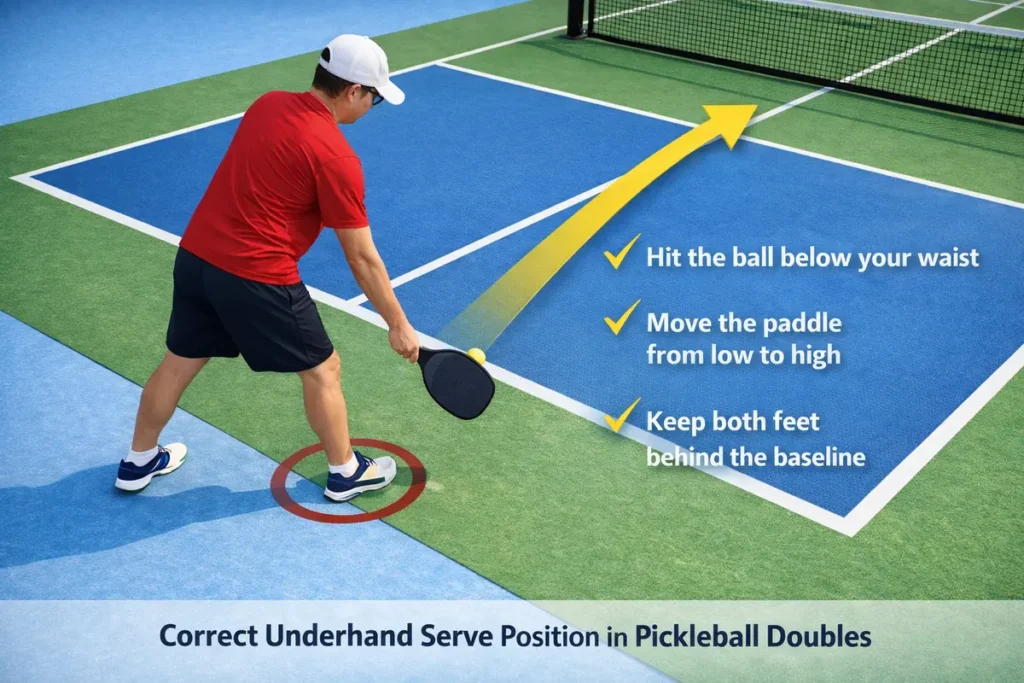
In Pickleball, you always serve by swinging your paddle from below your waist and hitting the ball upward.
Important Serving Rules
- Hit the ball below your waist
- Move the paddle from low to high
- Keep both feet behind the baseline
- Do not touch the baseline while serving
Drop Serve Pickleball
A simple way to serve is the drop serve pickleball rules.
With this way, you let the ball fall to the ground first, then hit it. This makes it easier to serve and helps you control the ball better.
Where to serve in Pickleball doubles
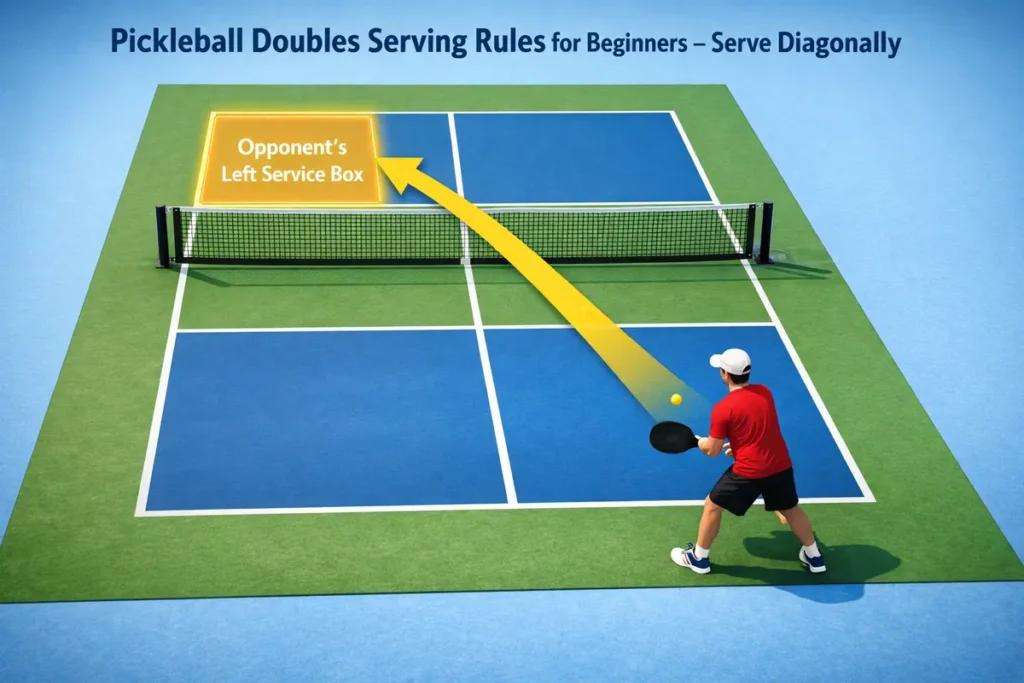
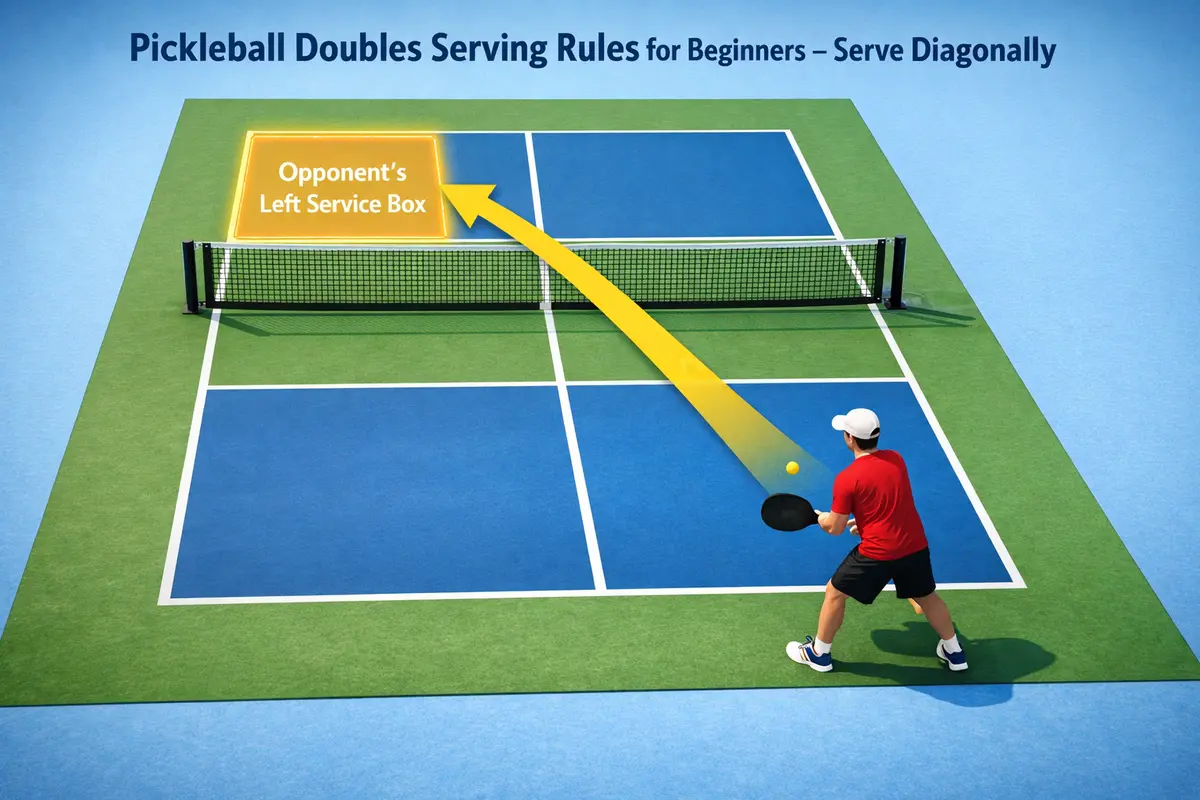
According to pickleball doubles serving rules for beginners, you always serve diagonally
This means
- From the right side → serve to opponent’s left service box
- From the left side → serve to opponent’s right service box
The ball has to go over the net and land in the service box. If it lands outside or hits the net, it is called a fault.
In doubles, serving follows a specific order
At the beginning of the game, just one player from a team serves. If that player loses the point, the other team serves.
During the game, each player on the team takes a turn serving.
The order is:
- The first server serves.
- If they lose the point, their partner serves.
- If both players lose their points, the serve goes to the other team.
This change is called a Side Out.
Right and Left Side Rule pickleball
Where you stand to serve changes based on the score:
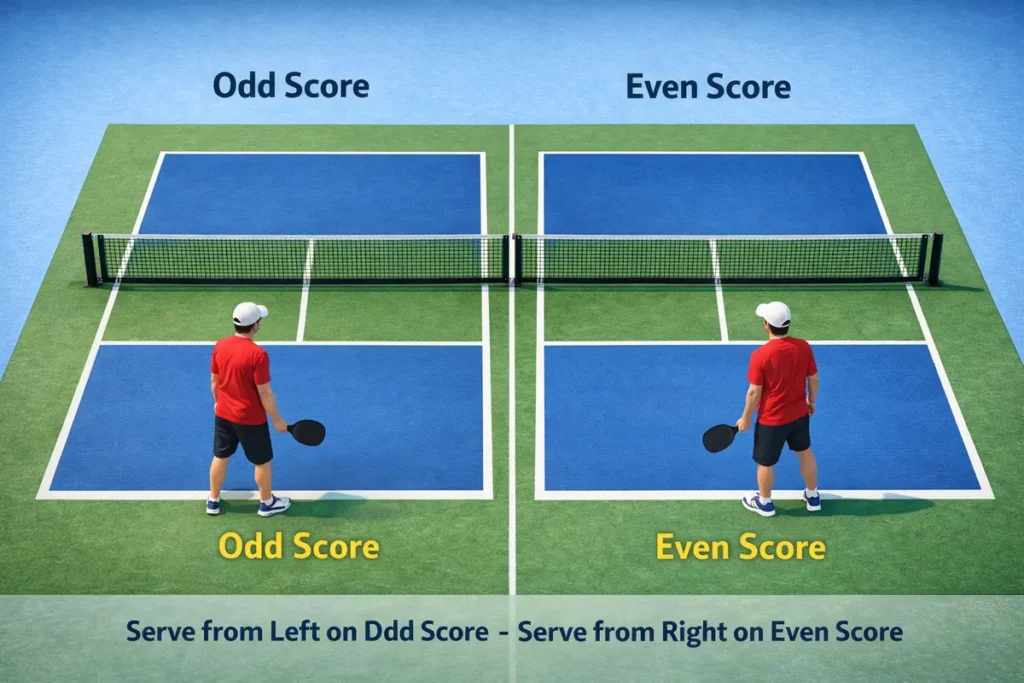
Score Position Rule
- Even score (0, 2, 4…) → Serve from right side
- Odd score (1, 3, 5…) → Serve from left side
When the server wins a point, both players switch sides.
How to Call the Score Before Serving
Before every serve, the score must be called loudly.
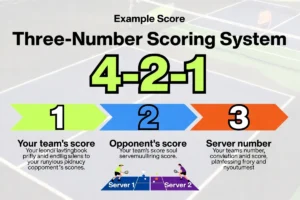
The score is called in three numbers:
Example: 5 – 3 – 2
- Your team → 5
- Opponent → 3
- Second server → 2
Common Faults While Serving
Some mistakes are counted as faults:
- Ball hits the net
- Ball lands outside the service box
- Feet touch the baseline
- Hitting the ball overhand
- Breaking any serving rule
If a fault happens, no point is awarded and the serve changes.
Common Mistakes During the Game
Beginners often make these mistakes:
- Serving too short into the kitchen area
- Forgetting the correct serving side
- Stepping on the baseline
Standing slightly behind the baseline and keeping track of the score can help avoid these issues.
Learn more about the kitchen line in Pickleball by reading this guidePickleball Serving Tips For Beginners
- Start with the drop serve
- Aim toward open court spaces
- Do not rush your serve
- Communicate with your partner
- Practice serving daily for a few minutes
Final Thoughts
After serving, always remember the Double Bounce Rule: the ball must bounce once on each side before you can hit it in the air. By learning these basic pickleball doubles serving rules, serving will start to feel natural. With regular practice, your confidence, aim, and overall play will get better. Serving in doubles is more than a rule; it’s a chance to lead, play as a team, and enjoy the game.